January 29, 2026, 3:30 p.m. The National Weather Service at Newport/Morehead City, NC has issued a Winter Storm Watch, Extreme Cold Watch, High Wind Watch, and a Coastal Flood Watch for Dare County, effective through 4 p.m. Sunday, February 1, 2026. Kill Devil Hills Emergency Management is closely monitoring the storm, which is forecasted to bring the most significant impacts from Saturday afternoon through Sunday. We urge everyone to prepare now for dangerous conditions and keep in mind that conditions are expected to linger through at least early next week. (The information contained in the NWS briefings are time-sensitive. Note expiration time on briefing.) |
|
|
|
|
|
5 Things to Know about Winter Weather Forecasts - Snow or ice totals can vary greatly over short distances. A heavy snow band may form, dropping more snow in one location while significantly less snow falls just a few miles away.
- Winter forecasts can change frequently. Forecasts may change as new model data becomes available. Always check weather.gov for the latest information.
- Focus more on the winter storm’s impacts. Don’t focus too much on exact numbers, and consider the full range of possibilities.
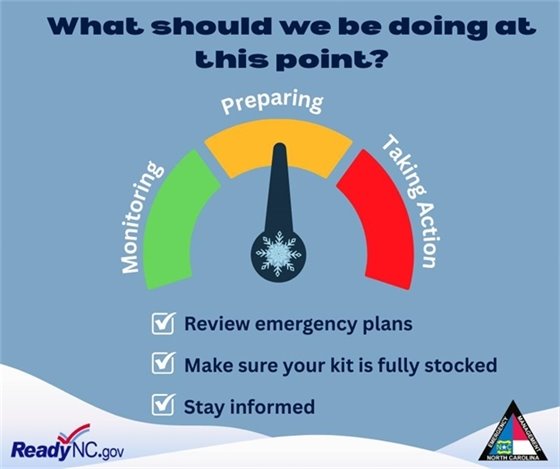
- Know your winter weather terminology. If a Watch is issued, get prepared for hazardous weather. If a Warning or Advisory is issued, take action – hazardous weather is occurring or will occur soon.
- Rely on a dependable source for weather information. Choose your information sources wisely, and follow a name or organization you know and trust.
(This information was provided by the National Oceanic and Atmospheric Administration.) |
|
|
|
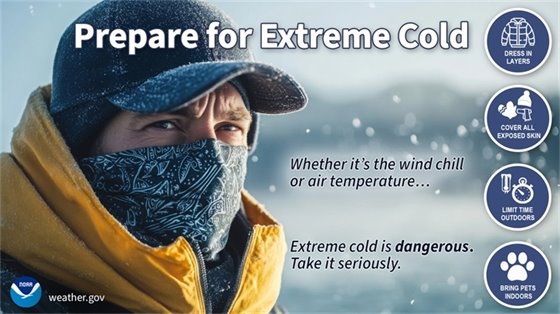
Know Your Risk for Winter Storms Winter weather creates a higher risk of car accidents, hypothermia, frostbite, carbon monoxide poisoning, and heart attacks from overexertion. View the CDC's Extreme Cold Weather Guide A winter storm can: - Last a few hours or several days.
- Cut off heat, power, and communication services.
- Put older adults, children, sick individuals and pets at greater risk.
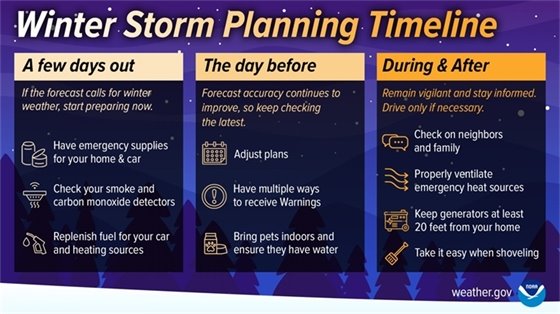
No matter if it is winter weather, a hurricane, or another type of disaster, it’s critical to always have a plan in place (make a plan) and supplies stocked (build a kit). |
|
|
|
|
|
Home Safety Tips - NEVER use a charcoal grill, stove, or oven to heat your home.
- Maintain heating equipment and chimneys by having them cleaned and inspected each year by a professional.
- Use caution with candles. They should be placed in a sturdy holder and placed at least 12” from anything that can burn. NEVER leave them burning unattended or overnight.
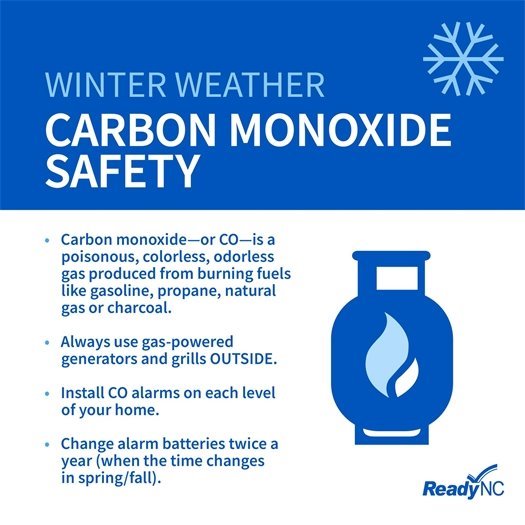
- Install working carbon monoxide detectors on every level of your home. Carbon monoxide is a colorless, odorless gas that can kill you, your family, and pets.
|
|
|
|
|
|
|
|
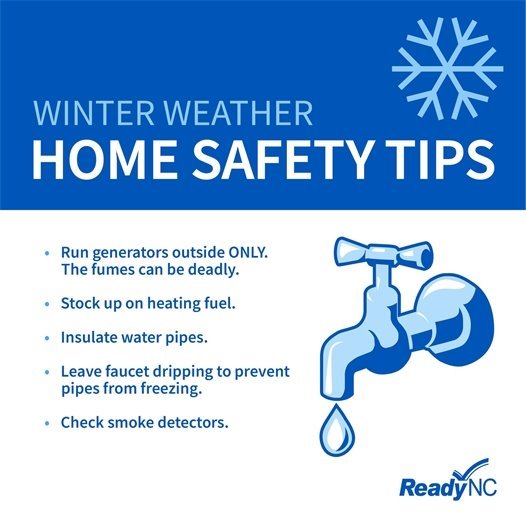
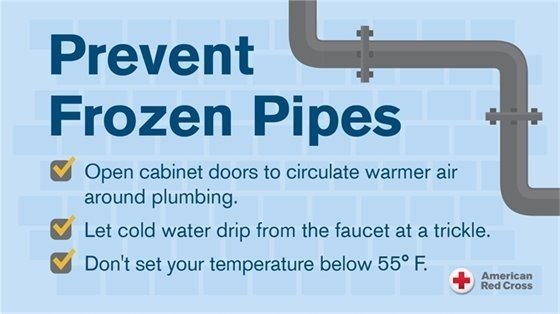
Frozen Pipes Water has a unique property in that it expands as it freezes. This expansion puts tremendous pressure on whatever is containing it, including metal or plastic pipes. No matter the strength of a container, expanding water can cause pipes to break. Pipes that freeze most frequently are: - Pipes that are exposed to severe cold, like outdoor hose bibs, swimming pool supply lines, and water sprinkler lines.
- Water supply pipes in unheated interior areas like basements and crawl spaces, attics, garages, or kitchen cabinets.
- Pipes that run against exterior walls that have little or no insulation.
Click on this link to learn how to protect pipes from freezing and how to thaw frozen pipes. |
|
|
|
|
|
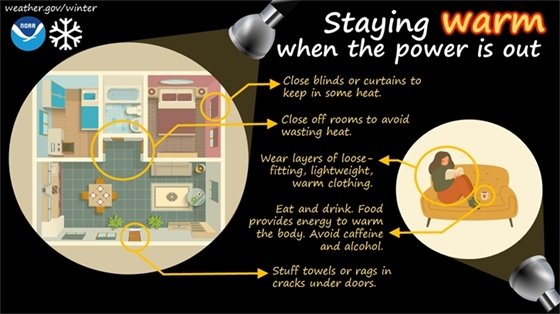
Preparing for Power Outages Winter storms may bring power outages that can disrupt things like communications, utilities, transportation, stores, gas stations and ATMs, and prevent your ability to use electrically powered medical devices. It’s important to be prepared for power outages. - Keep freezers and refrigerators closed. Throw away any food that has been exposed to temperatures 40 degrees or higher for two hours or more, or that has an unusual odor, color or texture.
- If you use a generator, ONLY use it outdoors and away from windows. (Learn how to use a generator safely.)
- Do not use a gas stove or oven to heat your home.
- Disconnect appliances and electronics to avoid damage from electrical surges.
- Have alternate plans for refrigerating medicines or using power-dependent medical devices.
Click here for more tips on power outages.
To see if an outage has occurred in your area, or to make a report of one, please visit Dominion Energy's website or call 1-866-366-4357. |
|
|
|
|
|
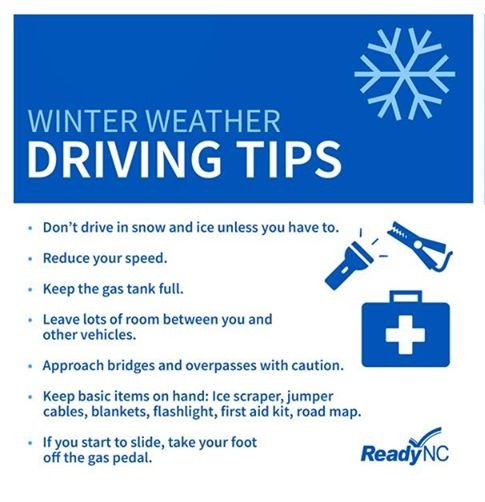
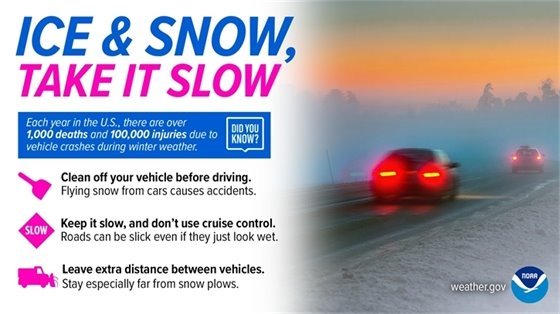
Travel Safety Tips During a winter weather event, if possible, stay off the roads. If you must travel, check for local road condition updates. Create an emergency supply kit for your car. Include jumper cables, sand, a flashlight, warm clothes, blankets, bottled water and non-perishable snacks. Keep a full tank of gas. Don't let black ice sneak up on you: - Black ice can form on any road, but also along curbs and drainage areas due to melting snow.
- More prevalent at night, but can still be around in the morning.
- Use caution when driving during freezing temperatures, after rain, or snowmelt.
For updates regarding road conditions, please visit DriveNC.gov and follow North Carolina Department of Transportation and NCDOT NC 12 on Facebook. |
|
|
|
|
|
|
|
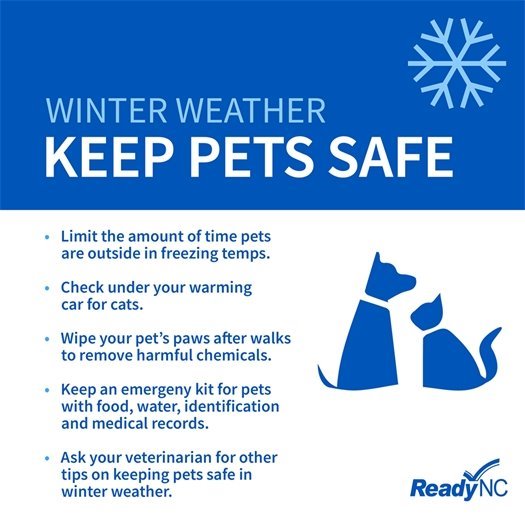
Pet Safety Take steps to keep your pets safe, warm, and dry when the weather gets wet and cold. Keep pets indoors as much as possible. Provide hay and a water source for any livestock, and shelter if feasible. Signs your pet might be too cold: Shivering, tail tucking, whining or anxious behavior, lifting paws, reluctancy to move, snow or ice build up on paw pads or coat. |
|
|
|
|
|
|
|
|
|
|
|
 Share on Facebook
 Share on Twitter
 Share via Email
