Living Safely with Bears
There have been reports of bear sightings in Town, specifically in the Landing and Wright Woods Subdivisions. The NC Wildlife Resource Commission is aware of the sightings. They do not typically trap or relocate bears. Most bears that wander into a residential area will quickly retreat to their natural habitat, particularly if no food source is around. While we do not have a permanent black bear population along the Outer Banks, it is not uncommon for one to pass through our area. In the springtime, these bears are usually young males looking for territory of their own.
The Wildlife Commission encourages everyone to follow the principles of BearWise, a nationwide program created by bear biologists to responsibly coexist with black bears:
• NEVER FEED OR APPROACH BEARS. Feeding bears (intentionally or unintentionally) trains them to approach homes and people for more food. Bears will defend themselves if a person gets too close, so don’t risk your safety and theirs!
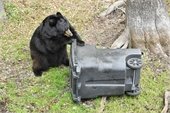
• SECURE FOOD, GARBAGE AND RECYCLING. Food and food odors attract bears so don’t reward them with easily available food or garbage.
• REMOVE BIRD FEEDERS WHEN BEARS ARE ACTIVE. Birdseed and other grains have a high calorie content making them very attractive to bears. The best way to avoid conflicts with bears is to remove feeders.
• NEVER LEAVE PET FOOD OUT. Feed outdoor pets portion sizes that will be completely eaten during each meal and remove leftover food and food bowl. Securely store these foods so nothing is available to bears.
• CLEAN AND STORE GRILLS. After you use an outdoor grill, clean it thoroughly and make sure that all grease and fat is removed. Store cleaned grills and smokers in a secure area that keeps bears out.
• LET NEIGHBORS KNOW. Share news with your friends and neighbors about recent bear activity and how to avoid bear conflicts. Bears have adapted to living near people; now it’s up to us to adapt to living near bears.






 Share on Facebook
 Share on Twitter
 Share via Email
